


Islamabad: Almost 40 years after the siege of Makkah, the ruling family of Saudi Arabia – the House of Saud – is once again in the eye of the storm. This time, the storm is triggered by the killing of journalist Jamal Khashoggi.
When extremist insurgents sieged Masjid al Haram in Makkah in 1979, they demanded the removal of the ruling family of Saudi Arab. The plan of regime change failed at that time as Saudi special forces and Pakistani Commandos of the Special Services Group (SSG) participated in the operation to end the siege of the Holy Kaaba.
Almost 40 years later, the plan of regime change is being revisited- albeit differently. The spotlight is once again fixed on the ruling family and specifically Crown Prince Muhammad Bin Salman after at least two officials in his inner circle were identified as being part of the hit squad which killed the dissident Saudi journalist. The officials now under arrest might also be probed if there was a larger conspiracy to frame the Crown Prince.
Saudis insist the Crown Prince was not even remotely aware of the activities carried out by people who tried to act as “state within a state.” Thinking within the Kingdom is that rogue elements acted on their own to kill Jamal Khashoggi.
Since the killing of journalist Jamal Khashogi on October 2 in the Istanbul consulate of Saudi embassy, a spate of behind the scene events are happening in international power corridors. Some even flirting animatedly with idea of regime change in Suadi Arabia by hitting out at Crown Prince Muhammad Bin Salman. Sensing an opportunity, everyone seems to want their pound of flesh in the form of mega deals from Saudi Arabia as the Saudis attempt to firefight the criticism over the Khashoggi’s killing.
Khashogi’s killing has given leverage to US and other powers to temporarily put brakes on ambitious plans of MBS and try to force a change in the Saudi policies over Yemen and also to improve ties with Qatar. Turkey is looking forward to extract its own pound of flesh by continuing strategic leaks in the sorry saga.
The criticism directed at Saudi Arabia is more than even when 9/11 happened and it’s not without a reason. Some analysts think the killing of Jamal Khashoggi is a black swan event which could trigger in Saudi Arabia a string of events similar to 2011 Arab Spring.
Saudi Arabia is perhaps the only country which remained safe from the disastrous effects of engineered regime change in the Middle East during the first half of the twenty first century. The imperial project of regime change took a great deal of humanitarian cost in Iraq, Egypt, Bahrain, Syria and Yemen. And the list goes on.
Saudi Arabia remained safe from turmoils of regime change because of its deep-rooted history as an old established culture and society with strong roots. The phenomenon was explained by MBS in a recent interview to Bloomberg in response to insulting comments by US President Donald Trump.
“Saudi Arabia was there before the United States of America. It’s there since 1744, I believe more than 30 years before the United States of America. And I believe, and I’m sorry if anyone misunderstands that, but I believe President Obama, in his eight years, he worked against many of our agenda – not in Saudi Arabia, but also in the Middle East. And even though the US worked against our agenda we were able to protect our interests. And the end result is that we succeeded, and the United States of America under the leadership of President Obama failed, for example in Egypt,” MBS told Bloomberg.
MBS has ambitious plans to change a lot in the power matrix in Middle East and on the world stage. In addition to Egypt, those wishing to write off MBS may also like to learn from the case of President Bashar Al Asad in Syria. Almost seven years after the Arab Spring in 2011, he is still calling the shots and all efforts at regime change failed there.
At the moment, idea of regime-change in Saudi Arabia due to Jamal Khashoggi’s killing could simply be dismissed as wishful thinking as a bigger social change is being engineered in the Kingdom from the palace of the Crown Prince as part of his vision 2030. A top down approach! The Crown Prince is trying to engineer a social revolution from his palace, unlike the forces which were unleashed by the Arab Spring in 2011 with bloody consequences.
MBS was noticed in world capitals as soon as he announced his ambitious plans to reform Saudi Arabia. His 2030 detailed vision for reforms with specific plans and projects seems to have made his threat perception much bigger.
The takeover of key levers of state apparatus by MBS was swift in the past almost two years. Now, the economic team responsible for diversification, the armed forces, intelligence services and the national guard, all report to the powerful Crown Prince as King Salman, now 82, sees his son calling the shots.
Saudi Arabia is making a transition from a closed society to a modern one as part of social liberalisation vision of Crown Prince Muhammad Bin Salman. Vision 2030- the plan to reform the world’s biggest oil exporting country is already having effects on the streets in Riyadh where foreigners are now more visible could be seen moving freely.
The process of change is trickling down in the streets gradually. The old cultural barriers are breaking down and women could be seen driving on roads. A transition, though subtle, but with far reaching effects of emancipating the female half of the population whose window to the world was traditionally depicted through the black veil as part of an all-encompassing black Burqa.
The plans also include building a dream futuristic city, NEOM, in the North West of the country. Though, many term it a plan to imitate Dubai, the planners believe it be much more than simply being a tourism hub.
Pakistani Prime Minister Imran Khan recently participated in the big investment conference- Davos in the Desert- primarily meant to attract foreign investment in Saudi Arabia.
Although Saudi officials appreciated the extempore speech of Prime Minister Imran Khan, Pakistani diaspora in Riyadh felt the speech to be short in concrete plans of bilateral cooperation.
PM Imran Khan’s speech was good in rhetoric but lacking in substance. Rather than telling the Saudis what Pakistan could export and invest in their country, the Pakistani delegation failed to come up with specific plans for business ventures in Saudi Arabia.
After going through the 2030 vision document of Saudi government, it seems no one in Pakistani delegation had seen the potential of joint venture projects which Pakistan could do with Saudi Arabia.
The world isn’t mad for trying to frame MBS. MBS is here to implement Vision 2030 with far reaching consequences for Middle East and the world at large. As the saying goes, when Saudi Arabia shifts the gears GCC responds; when GCC responds, the Islamic world feels the impact; when Islamic world feels the impact, rest of the world cannot be a bystander. And that is happening right now as the world is watching Saudi Arabia.


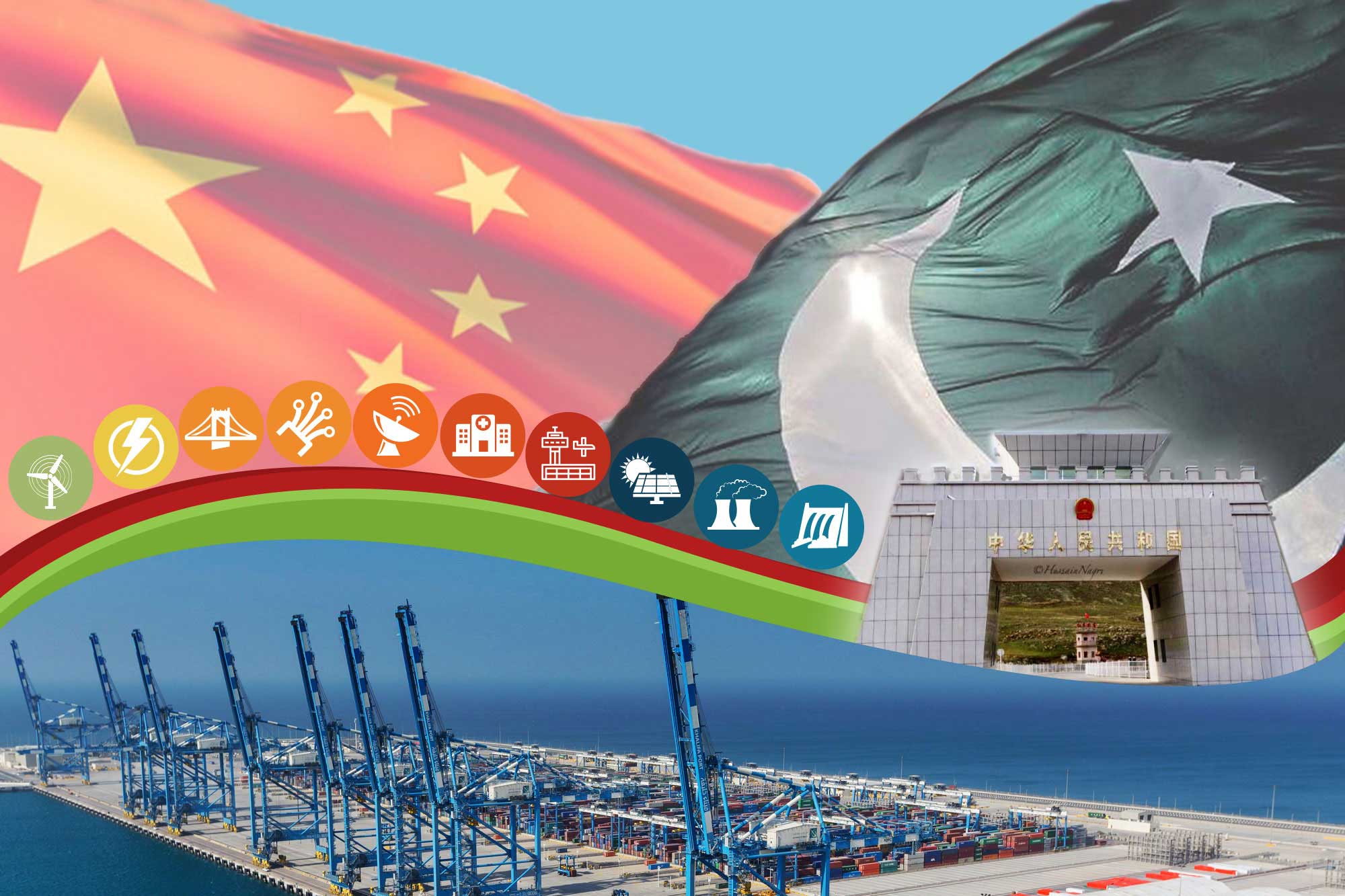



Imran Khan CPEC Diplomacy: Remodelling Trade Politics between Pakistan, Iran, Saudi Arabia and China